
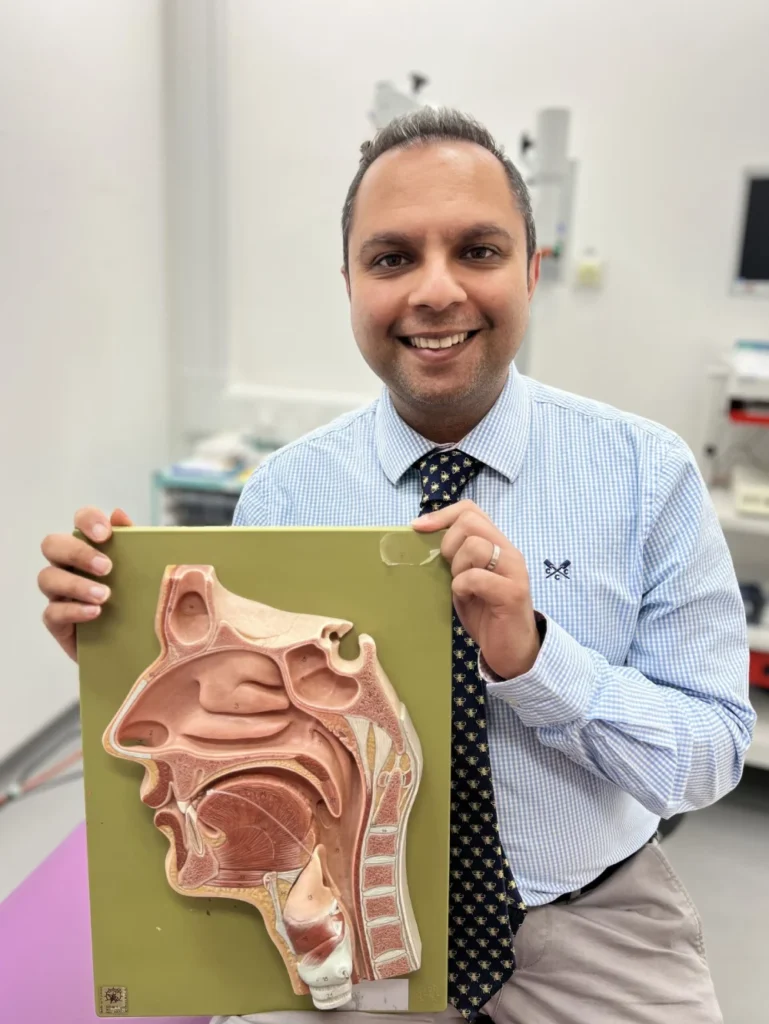
Septal perforation repair is a specialised surgical procedure designed to close holes in the nasal septum, the thin wall that divides the two nostrils. This condition can cause significant discomfort and breathing difficulties, but with proper treatment, patients can experience substantial improvement in their symptoms and quality of life.
Dr Vikas Acharya is an experienced otolaryngologist serving patients in Bushey and surrounding areas. With extensive expertise in nasal and sinus conditions, Dr Acharya provides comprehensive care for patients requiring septal perforation repair and other ENT treatments.
What Is Septal Perforation?
A septal perforation is a hole or opening in the nasal septum, the cartilage and bone structure that separates the left and right nasal passages. This condition can range from small, barely noticeable perforations to larger openings that significantly impact breathing and nasal function.
The septum plays a crucial role in directing airflow through the nose and maintaining proper humidity levels in the nasal passages. When a perforation occurs, it disrupts this natural process and can lead to various uncomfortable symptoms.
Types of Septal Perforations
Septal perforations are typically classified based on their size and location:
- Small perforations (less than 1cm) - often cause minimal symptoms
- Medium perforations (1-2cm) - may cause moderate breathing difficulties
- Large perforations (greater than 2cm) - typically result in significant symptoms
- Anterior perforations - located towards the front of the nose
- Posterior perforations - situated towards the back of the nasal cavity
What Causes Septal Perforation?
Understanding the underlying causes of septal perforation is essential for both prevention and treatment planning. Various factors can contribute to the development of this condition.
Medical and Surgical Causes
- Previous nasal surgery complications
- Aggressive nasal cauterisation for nosebleeds
- Chronic nasal infections
- Autoimmune conditions such as Wegener's granulomatosis
- Inflammatory diseases affecting the nasal passages
Environmental and Lifestyle Factors
- Chronic cocaine use
- Excessive use of nasal decongestant sprays
- Exposure to industrial chemicals or irritants
- Chronic nose picking or trauma
- Prolonged use of nasal oxygen therapy
What Are the Symptoms of Septal Perforation?
The symptoms of septal perforation can vary significantly depending on the size and location of the hole. Some patients may experience mild discomfort, whilst others face more severe complications that significantly impact their daily lives.
Common Symptoms
- Whistling sounds during breathing
- Chronic nasal congestion
- Frequent nosebleeds
- Nasal crusting and dryness
- Reduced sense of smell
- Facial pain or pressure
- Recurrent sinus infections
Advanced Symptoms
In more severe cases, patients may experience:
- Significant breathing difficulties
- Chronic headaches
- Sleep disturbances due to nasal obstruction
- Changes in voice quality
- Persistent nasal discharge

How Is Septal Perforation Diagnosed?
Accurate diagnosis of septal perforation requires a thorough examination by an experienced ENT specialist. Dr Acharya employs various diagnostic techniques to assess the extent and characteristics of the perforation.
Clinical Examination
The diagnostic process typically begins with a detailed medical history and physical examination. This includes:
- Assessment of symptoms and their duration
- Review of previous nasal surgeries or trauma
- Examination of medication history
- Visual inspection of the nasal passages
Advanced Diagnostic Tools
To obtain a comprehensive view of the perforation, additional diagnostic methods may include:
- Nasal endoscopy for detailed visualisation
- CT scans to assess the size and location precisely
- Rhinomanometry to measure airflow
- Biopsy if underlying disease is suspected
What Are the Treatment Options for Septal Perforation?
Treatment for septal perforation depends on several factors, including the size of the perforation, the severity of symptoms, and the patient’s overall health. Not all perforations require surgical intervention, and conservative management may be appropriate for some patients.
Conservative Management
For small perforations with minimal symptoms, non-surgical approaches may be recommended:
- Nasal saline irrigation to maintain moisture
- Topical ointments to prevent crusting
- Humidification therapy
- Silicone septal buttons or prosthetics
- Regular monitoring and follow-up care
Surgical Septal Perforation Repair
When conservative measures are insufficient, septal perforation repair surgery may be recommended. This procedure aims to close the hole and restore normal nasal function.
How Is Septal Perforation Repair Surgery Performed?
Septal perforation repair is a complex procedure that requires considerable expertise and precision. The surgical approach depends on the size, location, and characteristics of the perforation.
Surgical Techniques
Several surgical methods may be employed for septal perforation repair:
- Local flap reconstruction using surrounding nasal tissue
- Cartilage grafting from the ear or rib
- Mucosal advancement flaps
- Composite grafts combining different tissue types
- Endoscopic repair techniques for improved visualisation
Procedure Overview
The surgery is typically performed under general anaesthesia and may take several hours depending on the complexity of the repair. The surgeon carefully prepares the edges of the perforation and uses appropriate grafting materials to create a watertight closure.
What Can I Expect During Recovery?
Recovery from septal perforation repair requires patience and careful adherence to post-operative instructions. The healing process is gradual, and patients should be prepared for several weeks of recovery time.
Immediate Post-Operative Period
In the first few days following surgery, patients may experience:
- Nasal congestion and stuffiness
- Mild to moderate discomfort
- Some nasal drainage or bleeding
- Temporary changes in sense of smell
- Fatigue and the need for rest
Recovery Timeline
The recovery process typically follows this general timeline:
- First week: Rest and gentle nasal care
- 2-3 weeks: Gradual return to normal activities
- 4-6 weeks: Significant improvement in symptoms
- 3-6 months: Complete healing and final results
What Are the Success Rates for Septal Perforation Repair?
The success of septal perforation repair depends on various factors, including the size of the perforation, the patient’s overall health, and the surgical technique employed. Understanding realistic expectations is important for patients considering this procedure.
Factors Affecting Success
- Size and location of the perforation
- Quality of surrounding tissue
- Patient's healing capacity
- Adherence to post-operative care
- Absence of underlying inflammatory conditions
Expected Outcomes
Successful septal perforation repair can provide significant benefits:
- Improved nasal breathing
- Reduction in whistling sounds
- Decreased frequency of nosebleeds
- Better nasal humidity and comfort
- Enhanced quality of life
Are There Any Risks or Complications?
As with any surgical procedure, septal perforation repair carries certain risks and potential complications. Dr Acharya will discuss these thoroughly during your consultation to ensure you can make an informed decision about your treatment.
Potential Complications
- Incomplete closure or recurrence of perforation
- Infection at the surgical site
- Changes in nasal shape or function
- Temporary or permanent changes in sense of smell
- Scarring or adhesions within the nose
- Need for additional procedures
Minimising Risks
The risk of complications can be reduced through:
- Choosing an experienced ENT surgeon
- Following pre-operative instructions carefully
- Maintaining good overall health
- Adhering to post-operative care guidelines
- Attending all follow-up appointments
When Should I Seek Treatment?
If you suspect you may have a septal perforation, it’s important to seek evaluation from a qualified ENT specialist. Early assessment can help prevent complications and determine the most appropriate treatment approach.
Signs That Require Medical Attention
- Persistent nasal congestion or breathing difficulties
- Frequent nosebleeds without obvious cause
- Whistling sounds during breathing
- Chronic nasal crusting or dryness
- Recurrent sinus infections
- Changes in sense of smell
Benefits of Early Treatment
Seeking prompt medical attention for septal perforation can offer several advantages:
- Prevention of perforation enlargement
- Better surgical outcomes when repair is needed
- Reduced risk of complications
- Improved quality of life sooner
- Access to conservative treatment options
Conclusion
Septal perforation repair is a specialised procedure that can significantly improve quality of life for patients experiencing symptoms related to holes in their nasal septum. With proper evaluation, appropriate treatment selection, and expert surgical care, many patients achieve excellent outcomes and relief from their symptoms.
The success of treatment depends on various factors, including the size and location of the perforation, the patient’s overall health, and adherence to post-operative care instructions. Conservative management may be sufficient for some patients, whilst others may benefit from surgical repair.
To find out whether septal perforation repair may be suitable for you, book a consultation with Dr Vikas Acharya. During your appointment, Dr Acharya will conduct a thorough evaluation of your condition and discuss the most appropriate treatment options based on your individual circumstances and symptoms.